When Inheritance Feels Heavy:
The Legacies We Don’t Ask For, Yet Must Learn to Carry
Published at
05 Dec, 2025
Author
Gripastudio
Not everything we inherit shines, yet even the burdens we receive carry a story, a lesson, and a gentle invitation — to understand what came before us, and perhaps, to heal it. Because as the Javanese say, “sak elek-eleké wong tuwa, tetep kudu disembah” — imperfect or not, they are still our parents.
This reflection continues the quiet conversation we began in our earlier whispers on inheritance — first about what we receive in forms and titles, and then about the legacy that cannot be counted.
And now, perhaps it is time to look at the inheritances that weigh heavier, the ones we rarely talk about — yet often shape us the most.
There is a kind of inheritance people like to talk about — houses, businesses, land, investments, family ventures.
And then there is the kind no one posts about. The kind whispered in corners. The kind that arrives not as a blessing, but as a knot in the stomach.
I’ve seen it more than once — and perhaps you have too.
A parent leaves behind financial debts. A struggling business. A reputation stained by old mistakes. A family name that carries more whispers than applause.
And the child — the heir — is left standing in the middle of it, holding a story they didn’t write, holding consequences they never chose.
This is the inheritance people rarely discuss. But maybe… we should.
The Distance That Forms Between Parent and Child
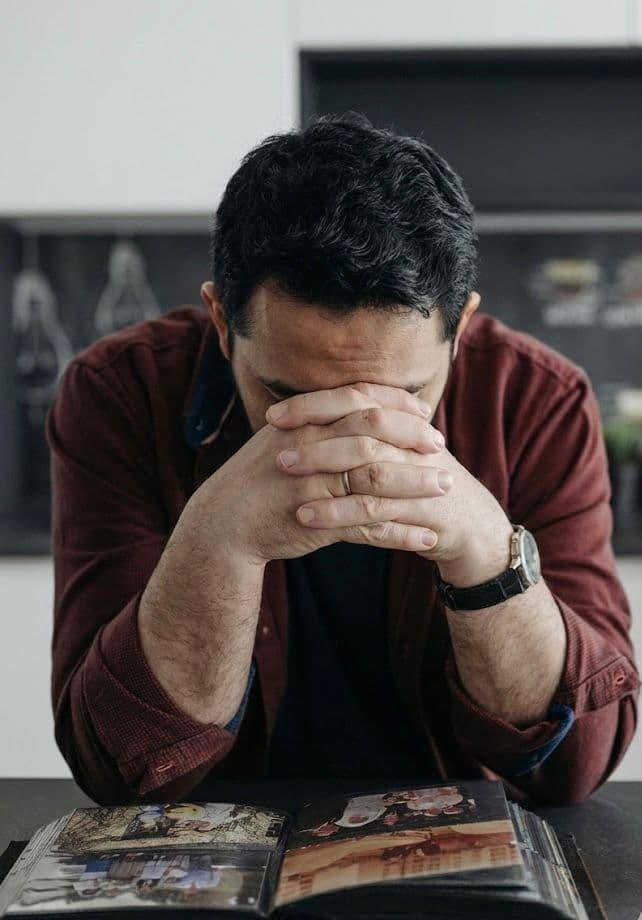
Sometimes, the “negative inheritance” begins long before the parent passes. It begins while they are still alive — a financial mess, a public embarrassment, a failed relationship, a business that collapsed… and the child struggles with disappointment, shame, even resentment.
I’ve seen children pull away, keeping conversations brief, avoiding family gatherings, slowly disconnecting. Not because they don’t love their parents, but because they don’t know how to love them in that situation.
It is easier to distance ourselves from what we do not understand.
But time has a way of softening our edges. And as we grow older, we begin to see things we couldn’t see when we were young:
That parents are not always strong. That parents make mistakes too. That survival is not always pretty. That sometimes they weren’t careless — they were overwhelmed.
We inherit their story, yes — but maybe we also inherit the responsibility to see it more compassionately.
Every Debt Has a History
I once met someone who inherited not only a house, but also the unpaid loans that kept that house standing. For years she was angry. “How could they leave this burden to me?” she asked.
And in moments like that, I’m reminded of something we often hear during funeral services — that soft announcement inviting anyone who has a receivable from the deceased to come forward and contact the family.
A simple sentence… yet it carries an entire lifetime of unspoken stories.
It reminds us that even in death, we are asked to face whatever was unresolved, whatever was carried quietly.
But later, when she looked deeper, she discovered the truth:
Her parents had borrowed money because they wanted her to stay in school. Because they wanted to protect the family home. Because they didn’t want anyone to know how tight things really were.
Behind her burden… was their sacrifice.
Not all debts come from irresponsibility. Some come from love wrapped in imperfection.
The Reputation That Outlives the Person
Some inherit a name that carries more weight than wealth.
A family scandal. A lawsuit. A failed business that affected many. A leader who made wrong decisions. A mistake that became the only thing people remembered.
It’s painful for the child. It creates distance, confusion, and sometimes even identity crisis.
But I’ve learned something as a retiree, watching many stories unfold:
A person is never only their worst chapter. A parent is never only their mistakes. And a child has the power to write a new chapter the world hasn’t seen yet.
Sometimes fixing the past is not about apologising for what they did — but about living differently, building differently, showing the world that the family name can rise again.
What We Inherit Is Not What We Become
Young families often ask me: “What if the legacy we receive is broken?” “What if what’s left behind is more burden than blessing?”
And I always say gently:
You are not responsible for what you inherited. But you are responsible for what you do next.
Some inherit wealth and waste it. Some inherit nothing and build everything. Some inherit pain and choose to transform it.
Your starting point is not your definition. It is only your beginning.
And perhaps — we are chosen to be part of their story for a reason. Not to suffer through it, but to understand it, to complete it, to lift what they could not lift, or simply to bring closure to a chapter they themselves never finished.
Maybe the reason we are the heir is because we are the one capable of healing what fractured, repairing what broke, and rewriting what the world assumed was done.
Understanding Their Perspective
As we age, we begin to see our parents through a softer lens. We learn that:
They were raised in a different time. They were shaped by fears we never had to face. They carried pressures we never knew. They made decisions with the tools they had at the time.
Understanding does not erase the burden. But it gives us peace.
Because distance protects us — but compassion frees us.
Perhaps Fixing It Is Part of the Legacy
Sometimes the greatest honour we can offer our parents is not inheriting their wealth… but repairing their unfinished stories.
Clearing their debts. Restoring the family name. Running the last mile, they couldn’t finish. Or simply understanding why they fell short.
We don’t fix it to erase them. We fix it to extend them. To finish what they started, even imperfectly.
Not out of obligation — but out of love that is wiser than the wound.
Final Whisper
Inheritance is not always beautiful. It is not always convenient. It is not always fair.
But it is always human.
And what we carry — whether wealth, debt, reputation, or silence — is never the full picture of the people who came before us.
So we honour them by remembering: they did what they could with the life they understood.
And we honour ourselves by choosing what to do next with the life we have now.
Because sometimes, the truest form of inheritance is not what they left us, but who we become because of it.
Radio is paused