The Wealth We Never Measured
Published at
20 Apr, 2026
Author
Gripastudio
We spent years learning how to grow money, manage risk, and build something for the future. But along the way, time quietly slipped past us—unmeasured, unexamined, often taken for granted. What happens when we finally have more of it… but are no longer sure how to hold it?
I was having coffee with a fellow retiree.
Someone I used to advise, back when he was running his family business.
Over the years, the relationship had quietly shifted.
From advisor and client, to something more equal. More relaxed.
Two people, sharing time.
We sat, as we often do, with no urgency, no agenda.
Just coffee.
At some point, someone approached our table.
An old acquaintance of his. A former client, it seemed.
They exchanged greetings, a few updates, the usual pleasantries.
And before leaving, he smiled and said:
“You’re lucky… now you have more time.”
We both smiled.
It sounded like a compliment.
And perhaps it was.
But after he left, the words lingered.
.... lucky to have more time...
I looked at my friend. He smiled again, but this time, more quietly.
As if we both understood something that was not said.
Because the truth is, we did not suddenly receive more time.
Time was always there.
What changed was not the amount.
But our relationship with it.
And perhaps, for the first time, we were no longer trying to manage time —
but beginning to notice it.
The Illusion of Not Having Time
There was a time when we constantly said:
“I don’t have time.”
Meetings filled our days. Decisions demanded urgency. Everything felt important.
Time was something we chased. Something we tried to manage, optimise, stretch.
But looking back, perhaps it was not that we lacked time.
Perhaps we lacked the space to see it.
When Time Becomes Visible
Now, the days feel different.
There are fewer deadlines. Fewer demands. Fewer reasons to rush.
And suddenly, time becomes… visible.
Morning coffee is no longer a transition between meetings.
It is the moment itself.
A conversation is no longer a means to an outcome.
It is the purpose.
And yet, this visibility can feel unfamiliar.
Even uncomfortable.
Because we were trained to fill time.
Not to understand it.
The Nature of Time
Money can be earned. Lost. Earned again.
Time is different.
Time is irreversible. Once it passes, it does not return.
Time is irreplaceable. Nothing can substitute a moment that is gone.
And time cannot be replenished. There is no way to earn more of it.
We live as if it is abundant.
But in truth, it is the only thing we are constantly spending — without knowing how much remains.
A Different Kind of Wealth
So, what does it mean to have time?
It is not about having empty days. It is not about doing nothing.
It is about having the space to choose.
To pause. To notice. To be present without needing a reason.
Time wealth is not measured by how much time we have.
But by how gently aware we are within it.
The Illusion of Urgency
Today, we hear phrases like:
You Only Live Once. Don’t miss out.
YOLO. FOMO.
They remind us that time is limited.
But sometimes, they also push us to fill our time too quickly.
Too noisily.
To do more. Experience more. Chase more.
As if living fully means never being still.
And in trying not to miss out, we may end up missing the moment itself.
Because time, in its quiet way, has always been fair.
It is perhaps the most democratic thing we have.
Each of us is given the same 24 hours.
And yet, how differently we experience it.
Some moments feel full. Some pass unnoticed.
Others may find it quietly slipping by, almost without being felt.
Not because we do not value time.
But perhaps because we have not learned how to see it.
And perhaps, beneath all of this, there is something even quieter.
A sense of gratitude.
Not because we suddenly have more time.
But because we are still here to experience it.
To notice it. To feel it. To be part of it.
A Quiet Realisation
Sitting there, with my friend,
I realised something simple.
Perhaps we spent our earlier years learning how to earn a living.
And only now, we are beginning to learn how to live.
Then quieter questions followed.
What if we had understood time earlier? Would we have lived differently? Chosen differently?
Would we have spent more moments on what truly mattered — our families, our values, our quiet dreams that we kept postponing?
Would we have been less busy… and more present?
It is a difficult thought.
Because within it, there is a trace of something we rarely speak about.
Regret.
Not loud. Not overwhelming.
But subtle. Like a quiet awareness of moments that passed without us fully being there.
And yet, perhaps this is not something to carry heavily.
Because time, perhaps, was never really moving forward for us — only quietly counting down.
And still, within that quiet passing, it leaves something behind.
A gentler sense of what truly matters, of what we may still choose to do, and what we may wish to leave behind with what remains.
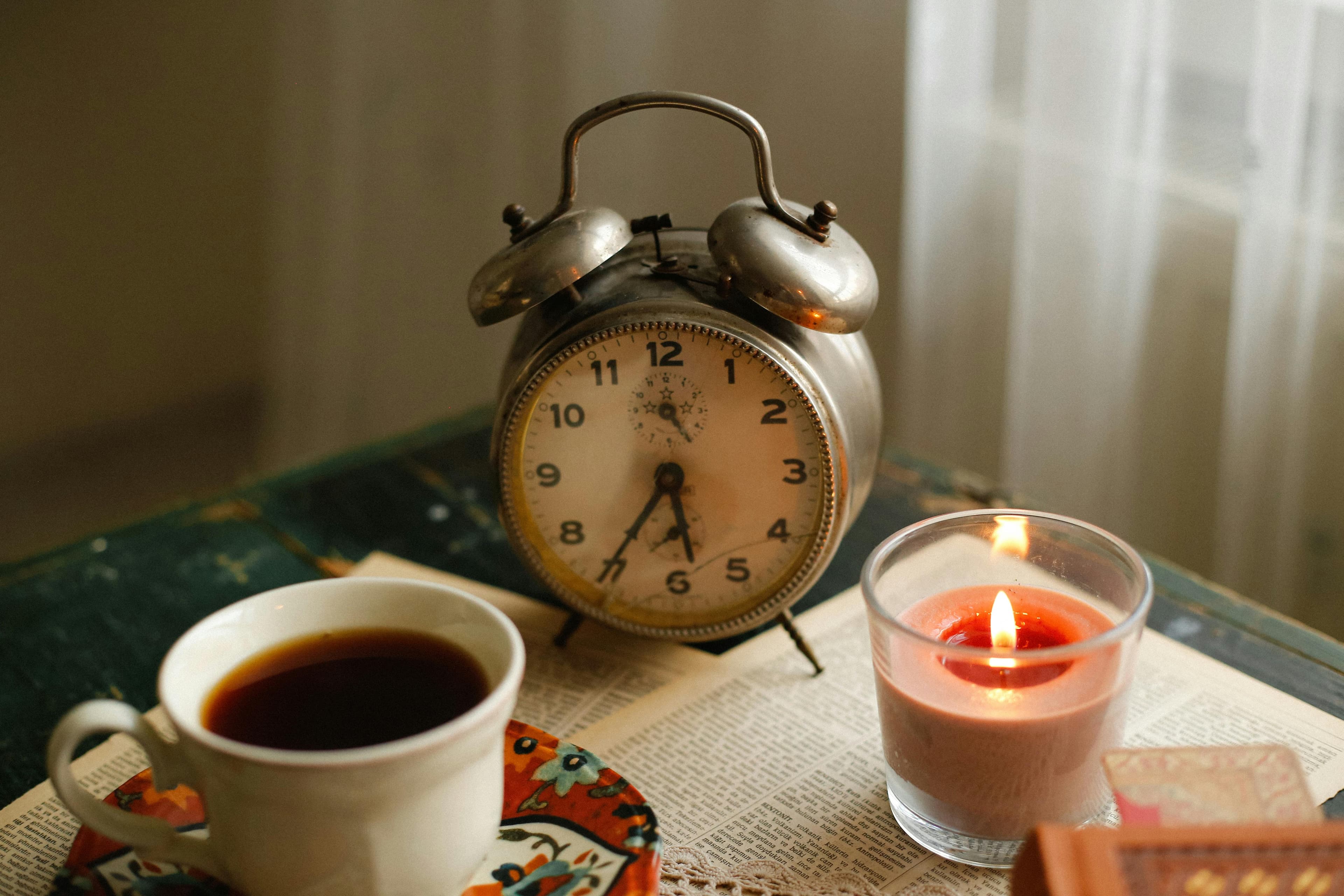
A Javanese Reflection
There is a saying:
“Urip mung mampir ngombe.” Life is only a brief stop for a drink.
A reminder that we were never meant to stay for long.
But perhaps, it is not just about how brief the stop is.
Perhaps it is also about how we drink.
Not in a hurry. Not just to quench our thirst.
But to truly taste it.
To pause. To notice. To appreciate each drop that is given to us.
Because maybe life was never meant to be rushed through.
But to be sipped.
And maybe, that is what time has been quietly offering us all along.
Not just moments to pass — but moments to feel.

Final Whisper
That afternoon, nothing extraordinary happened.
Just coffee. A short conversation. A passing remark.
“You’re lucky… now you have more time.”
Perhaps he was right. But not in the way he meant.
Because time was never something we gained.
It was something we finally began to see.
And perhaps the real question is not: How much time do we have?
But: Now that we can see it…
perhaps the question is no longer how we will use it —
but how we will appreciate it while it is still here.
Radio is paused