Living in the Middle

Published at
08 Mar, 2026
Author
Gripastudio
Between those who once protected us and those we now protect, many of us stand in a place that feels both heavy and sacred. We call it the sandwich generation—often speaking of its pressures and burdens. But what if living in the middle is not only a weight to carry, but also a quiet privilege we rarely pause to recognise?
I was standing in front of a room full of employees that morning, invited to share thoughts on financial literacy. My co-speaker had just finished his session—charts on the screen, numbers neatly arranged, explanations precise.
He spoke about household cash management. About expenses that never seem to go down. About savings that never feel enough.
And then he arrived at a familiar phrase:
“The sandwich generation.”
He explained it clearly, almost clinically. How supporting aging parents while raising children creates pressure on family budgets. How it delays wealth accumulation. How it complicates long-term planning.
Heads nodded across the room.
I understood why.
This was not a new topic to me. Years ago, when I was still actively promoting the importance of investing early, I often spoke about this exact challenge—about how time and compounding are easily disrupted when responsibilities multiply.
Yet standing there now—older, slower, with more space to reflect—I felt something different rising inside me.
Yes, the sandwich generation carries weight. And perhaps that is why we so often speak of it negatively.
Living in the middle is heavy.

Why the Sandwich Exists
The sandwich generation did not appear by accident.
It is shaped by time, culture, and history.
Our parents’ generation lived differently. Families were larger—five, six, sometimes eight children under one roof. Support was distributed. Responsibility was shared. One child helped with food, another with housing, another with care.
Today, families are smaller. Two children. Sometimes one.
At the same time, people live longer. Healthcare has improved. Life expectancy has stretched.
What was once shared among many now rests on the shoulders of a few.
Not because we failed. But because the world changed.
The Invisible Layer
What financial charts rarely show is the quiet pressure that never makes it into numbers.
The messages that arrive without warning: “Can you help sort this out?” “Can you transfer first?” “Are you available tonight?”
Requests to pay. Requests to decide. Requests to show up.
Slowly, almost imperceptibly, you become the one everyone relies on.
Not because you asked to be. But because you can.
And so the weight accumulates.
You calculate silently. You adjust quietly. You say yes more often than you should, because saying no feels heavier than carrying the burden yourself.
What makes it harder is not just the responsibility, but the absence of recognition.
No one applauds this role. No one pauses to ask how much pressure you’re carrying. The world simply assumes you will manage.
And you do.
Not because it’s easy. But because someone has to.
No wonder the sandwich generation is often spoken of with frustration, resentment, even bitterness.
When effort becomes routine and unseen, the weight feels even heavier.

Why It Feels Heavy
It feels heavy because the burden is not only practical. It is emotional.
You are standing between two generations you love, yet often carrying the weight alone.
It is not always easy to share this with your better half— especially when the pressure comes from their parents. You measure your words. You soften your tone. Because love, here, is fragile.
And parents, by nature, rarely want to feel like a burden. They do not want pity. They do not want to feel dependent.
So you manage not only finances, but feelings.
You step in quietly. You help without making it obvious. You carry their dignity as carefully as you carry their needs.
There is no manual for this.
No handbook on how much to give, when to pause, or how to explain that you, too, are tired.
You learn by doing. By missteps. By quiet adjustments.
And because so much of this happens silently, it is easy for others to miss how much you are holding together.
A Shift in Perspective
Somewhere between the numbers, the pressure, and the fatigue, a different thought began to surface.
What if being in the middle is not only a burden, but a sign of trust?
Trust is rarely announced. It is given quietly.
You are relied upon because you have shown—over time— that you are steady. That you are dependable. That you do not turn away when things become inconvenient.
You are chosen not because you are the strongest, but because you are willing.
Because you listen. Because you show up. Because you carry responsibility without making it loud.
Not everyone is given this place.
Some are never asked. Some are never trusted with such weight. Some never get the chance to be the bridge between generations.
This does not erase the heaviness. But it reframes it.
What if this position, difficult as it is, is also something to be cherished?
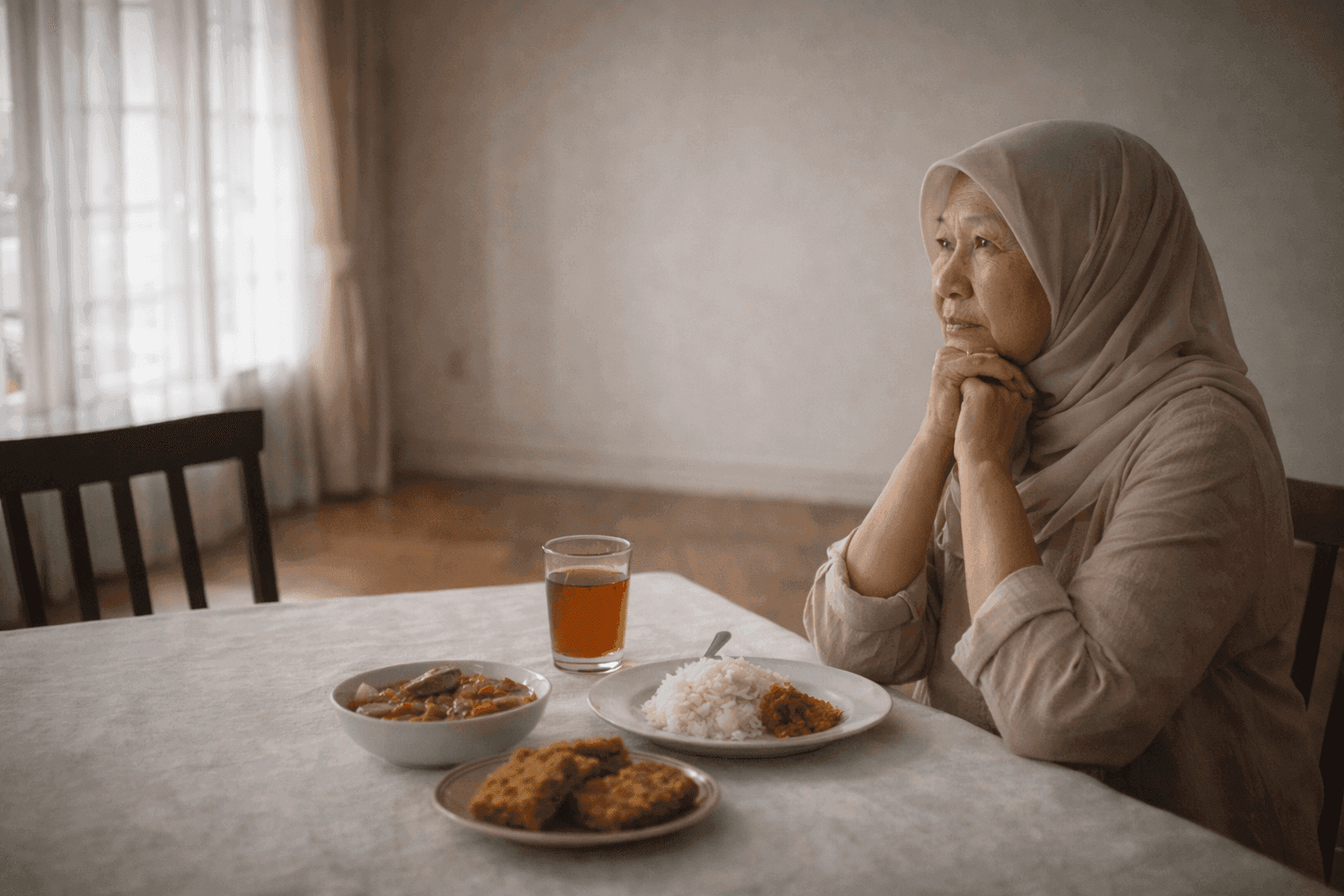
If We Chose Not to Stand in the Middle
Sometimes, it helps to ask the harder question.
What if we decided not to stand in the middle?
What if we chose distance instead of responsibility— telling ourselves that we deserved an easier life, that everyone should take care of themselves?
What would our children learn then?
They would see comfort chosen over care. They would learn that responsibility is optional when it becomes inconvenient. They would grow up not just hearing what we say, but absorbing what we do.
And our parents?
They might never ask. They would try to manage quietly. They would hide their needs behind pride and dignity.
But inside, they would feel it— the distance, the silence, the unspoken sense of being a burden.
And one day, much later, when the noise of daily life fades, what would remain for us?
Not relief. But questions.
Some regrets do not shout. They stay.
What Standing in the Middle Teaches
By choosing to stand in the middle, we teach without preaching.
We show our children what responsibility looks like in real life. Not perfect. Not glamorous. But steady.
And we show our parents something just as important:
That they did not fail as parents. That the values they planted took root. That their prayers—spoken or silent—were answered.
Because here we are, showing up. Carrying forward what they once carried for us.
We show them that their sacrifices were not wasted. That love, given patiently, does return— sometimes quietly, sometimes much later, but meaningfully.
And in doing so, we learn something ourselves.
That life is not always about balance, but about seasons.
That being relied upon is not a mistake— it is a sign that we are trusted.
And perhaps that is why, difficult as it is, this role deserves to be cherished.

Final Whisper
If you are living in the middle, and some days feel heavier than you expected, pause for a moment.
You are not failing. You are not weak.
You are carrying more than most people see.
You stand between two generations not because life is unfair, but because it trusts you with continuity.
This season may stretch you. It may exhaust you.
But it is also shaping something enduring.
And when the time comes— when your children grow, when the roles begin to shift— perhaps you, too, will be loved with the same care you once gave.
Because love, when carried faithfully in the middle, rarely ends there.
Living in the middle is heavy.
But it is also meaningful.
And that meaning— slowly, silently— becomes its own blessing.
Radio is paused