Beyond Profit: Rethinking What It Means to Invest
Published at
07 Feb, 2026
Author
Gripastudio
This is not a conversation about numbers, returns, or market timing. It is a quiet reflection on intention — on what truly grows when money is placed somewhere with care, or without it.
An exploration of investment as value creation: for employees and their families, for customers and communities, for the land we touch and the world we leave behind. Because perhaps the truest returns are not the ones we can calculate, but the ones we live with — long after the statements are forgotten.
For most of my working life, people came to me with a familiar expectation.
They assumed that because I was a financial advisor— because I had spent years inside markets, balance sheets, and numbers— I would have answers.
The practical kind.
“What’s the best investment right now?” “Which sector will perform next year?” “Is this the right time to enter?”
They leaned in slightly when they asked, as if waiting for a shortcut— an insight they could act on quickly, before the moment passed.
I understood that expectation. For years, I lived inside it.
And often, I could have answered them easily. With data. With trends. With probabilities.
Short-term answers, neatly wrapped.
But more and more, I found myself hesitating.
Not because I didn’t know what to say— but because I began to question whether the answer they expected was truly the answer they needed.
Was pointing them to the next opportunity really helping them?
Or was it simply feeding the idea that investing is about catching moments, rather than shaping consequences?
So sometimes, instead of giving a tip, I would pause— and ask myself quietly:
Is this explanation enough? Or am I offering something convenient, but incomplete?
That pause eventually led me to respond with a different question altogether:
“Are you looking for profit… or are you looking for blessing?”

The Comfort of Numbers
Profit is easy to talk about.
It is measurable. Comparable. Reportable.
It fits neatly into charts and statements. It gives clarity—even excitement.
A number goes up. We feel successful.
And there is nothing wrong with profit. It is necessary. It keeps businesses alive. It rewards effort and risk.
But over time, I learned that profit answers only a narrow set of questions:
How much did I gain? How fast? Compared to whom?
It does not ask:
At what cost? To whom? And what remains after?
When the Question Changes
As time passed, and as I watched companies rise and fall, something in me began to shift.
I saw organisations that pushed relentlessly for growth, as if there were no tomorrow.
Targets climbed every quarter. Expansion was celebrated without pause. Efficiency became the only language spoken.
On the surface, it looked impressive. Fast growth. Strong margins. Confident narratives.
But beneath it, something else was happening.
Employees burned out faster than they grew. Customers were treated as transactions, not relationships. Communities felt used, not included. The land around them gave more than it could afford.
Everything moved quickly— except reflection.
And then there were other companies.
They grew too, but differently. More slowly. More deliberately.
They asked harder questions before expanding. They listened—not only to shareholders, but to employees, customers, suppliers, communities, and the environment that sustained them.
They understood that growth without balance is not progress, but consumption.
When customers are respected, not extracted, growth stops being transactional— and starts becoming relational.
On paper, these two types of companies could look equally successful.
Similar revenues. Comparable returns.
But standing close to them, you could feel the difference.
One felt tense, constantly chasing the next quarter. The other felt grounded, aware that tomorrow also mattered.
That was when the question truly changed for me.
Investment was no longer just about backing growth. It was about choosing how growth happens, who is considered along the way, and who bears the cost of it.
Investment as Value Creation
What if investment is not just about capital growing, but about value expanding?
What if we asked different questions:
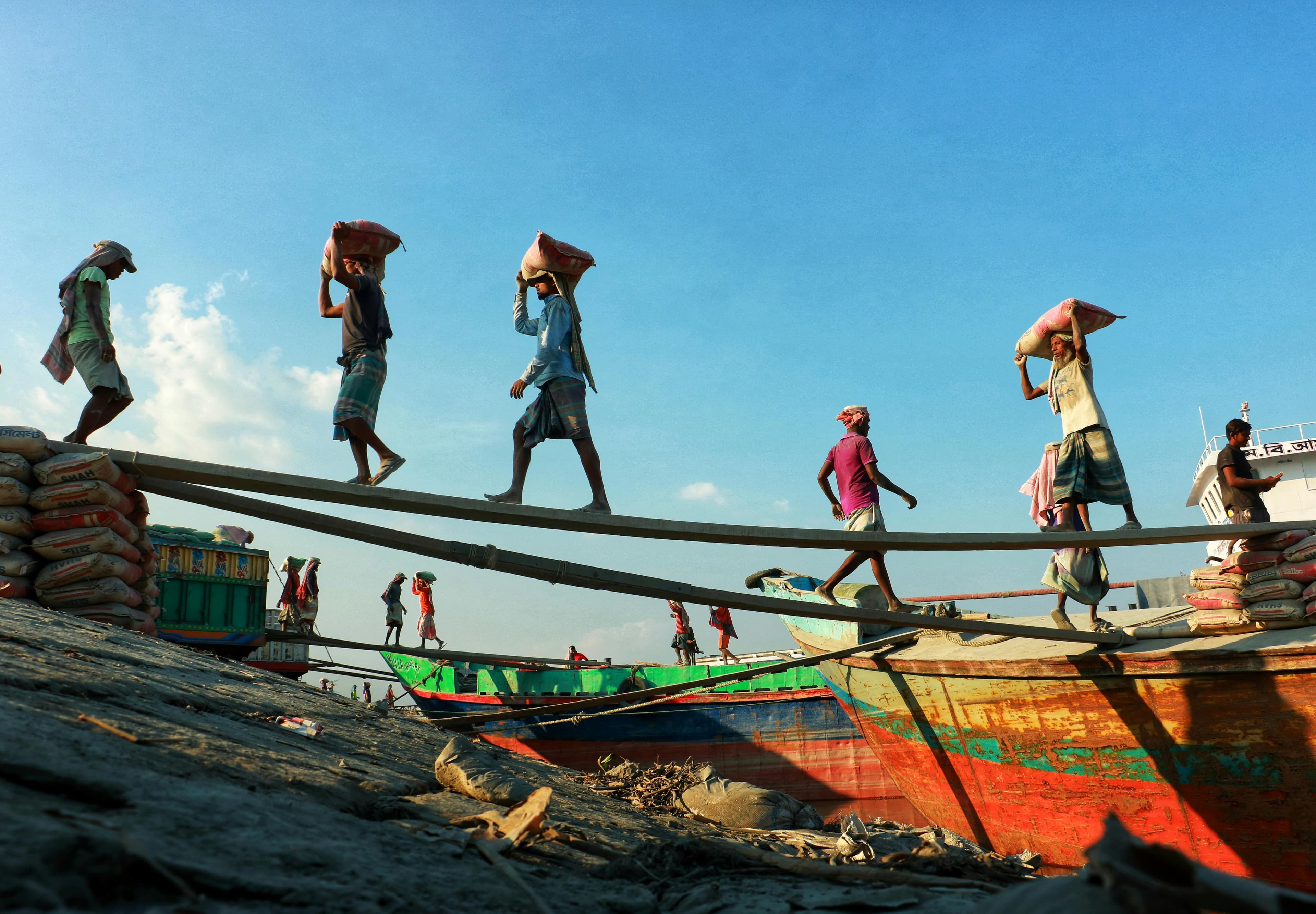
Do employees grow—not just work? Do their families feel more secure, not more anxious? Do customers feel respected, not manipulated? Do surrounding communities feel included, not displaced? Does the land remain alive, not depleted?
These things rarely appear on balance sheets. But they are real returns.
Intrinsic returns.
Unpriced. Often unnoticed. But deeply felt.
Redefining Wealth
Seen from this perspective, wealth begins to look different.
Wealth is no longer only about accumulation. It is about continuity.
About whether what we build can last— not just financially, but socially and environmentally.
True wealth does not exhaust the people who create it. It does not leave customers feeling used. It does not strip the land until nothing meaningful remains.
It sustains.
It allows employees to grow without burning out. Customers to trust without feeling exploited. Communities to develop without being hollowed out. Nature to recover, not merely endure.
Some people end their careers with more money than they started with— and less peace.
Others end with enough, and leave behind systems, relationships, and environments that are still standing.
They may not call it sustainability. They simply understood that taking more than we give is not success— it is debt, delayed.
That, to me, is wealth of a deeper kind.

Stewardship, Not Ownership
Over time, I came to see money less as something to deploy aggressively, and more as something entrusted.
Not everything we can invest in is something we should.
Just because an opportunity exists does not mean it deserves our participation.
This is where stewardship begins.
Stewardship asks: “What am I responsible for because I chose this?”
Not only financially— but morally, socially, and environmentally.
It asks us to think beyond our own lifetime.
What Remains After We’re Gone
One day, long after the statements are forgotten, what will still be here?
Will there be people who learned, grew, and were treated with dignity?
Will there be communities that remember you kindly? Land that healed rather than scarred? A culture that inspired others to build better, not just bigger?
Perhaps the most honest measure of an investment is not how much it returned to us, but what it left behind for others.

Final Whisper
Profit can be calculated. Value cannot always be counted.
But it can be felt.
In the lives touched. In the trust preserved. In the absence of regret.
When we invest, we are not only choosing where our money goes.
We are choosing what grows because it is there.
And maybe that is the question worth returning to, again and again:
Not “How much will I gain?” But “What will exist because I chose this?”
Because in the end, the most meaningful investments are not the ones that make us richer—
but the ones that leave the world a little more alive than we found it.
Radio is paused